
The New Landscape of AI Search
The search engine landscape has undergone a tectonic shift. In 2026, AI-powered platforms including SearchGPT, Google Gemini, and Perplexity AI now serve millions of queries daily, delivering synthesized, conversational answers instead of a traditional list of ten blue links. The era of Generative Engine Optimization (GEO) and Answer Engine Optimization (AEO) has arrived, and businesses that fail to adapt risk becoming invisible.
Unlike classic SEO, where ranking on page one was the primary objective, GEO and AEO require your content to be selected, cited, and paraphrased by AI engines in real time. To achieve this, your website must communicate meaning not just keywords to machine-readable systems. That is where structured data and semantic optimization become indispensable.
This guide walks you through the foundational principles and actionable techniques for mastering GEO and AEO in 2026, with SchemaExpertify as your primary tool for generating the structured data that makes it all possible.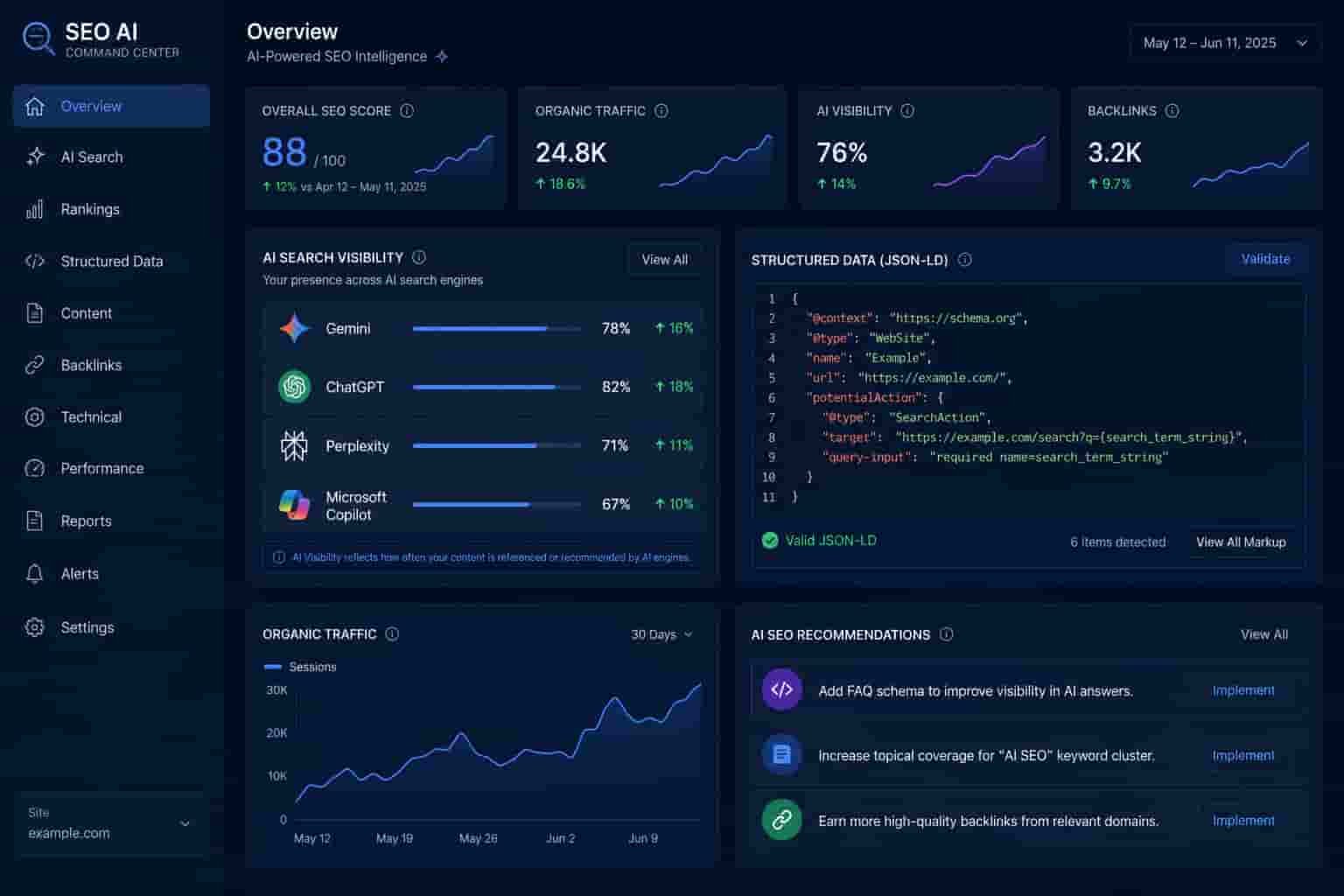
How AI Search Has Fundamentally Changed SEO
From Keywords to Entities
Traditional SEO relied heavily on keyword density, backlink counts, and metadata optimization. AI-driven search engines operate on an entirely different paradigm: they understand entities, relationships, and context. An entity is a well defined, uniquely identifiable concept a person, place, product, organization, or idea that AI systems can recognize, link, and cross-reference across the web.
SearchGPT synthesizes answers from multiple sources based on semantic relevance and trustworthiness. Google Gemini leverages its Knowledge Graph to validate entities and surface authoritative responses. Perplexity AI crawls and cites structured, factual content over generic blog posts. In each case, the underlying ranking signal is not just ‘does this page have the keyword?’ but rather ‘does this page describe a real, validated, trustworthy entity?’
The Rise of Zero Click AI Answers
A significant percentage of searches now conclude without a click. AI engines present synthesized answers directly in the interface. For your brand to appear in these zero-click answers, your content must be structured so that machines can extract, understand, and attribute it cleanly. This is the core challenge that GEO addresses.
JSON-LD Structured Data: The Foundation of GEO & AEO
What Is JSON-LD and Why It Matters
JSON-LD (JavaScript Object Notation for Linked Data) is the recommended format by Google for embedding structured data in your webpages. It allows you to communicate to search engines and AI systems exactly what your content is about in a language machines can unambiguously parse.
Structured data implemented via JSON-LD enables your content to appear in Rich Results, AI snippets, Knowledge Panels, Featured Snippets, and voice search responses. It is the bridge between your human readable content and machine-readable understanding.
Key Schema Types for AI Visibility
The following schema types are most impactful for GEO and AEO success in 2026:
- FAQPage Schema: Directly feeds the FAQ-style AI snippets common in ChatGPT, Gemini, and Perplexity responses. Marking up your Q&A content with FAQPage schema dramatically increases the probability that your answers will be cited verbatim by AI engines.
- Article Schema: Establishes authorship, publication date, and topical relevance. AI models weight content with clear Article markup higher when synthesizing editorial answers, as it signals credibility and timeliness.
- LocalBusiness Schema: Critical for businesses targeting local queries. Embedding NAP (Name, Address, Phone), operating hours, and geo-coordinates via LocalBusiness schema ensures your entity is properly registered in AI knowledge systems.
- Product Schema: For e-commerce and product-focused sites, Product schema communicates price, availability, reviews, and identifiers to AI engines making your inventory surfaceable in shopping-oriented generative queries.
All of these schema types and many more can be generated free of charge using SchemaExpertify, an advanced schema generator built specifically to help websites gain maximum visibility across AI-powered search platforms. Simply input your content details, generate the JSON-LD code, and paste it into your site’s <head> section or your CMS’s structured data field.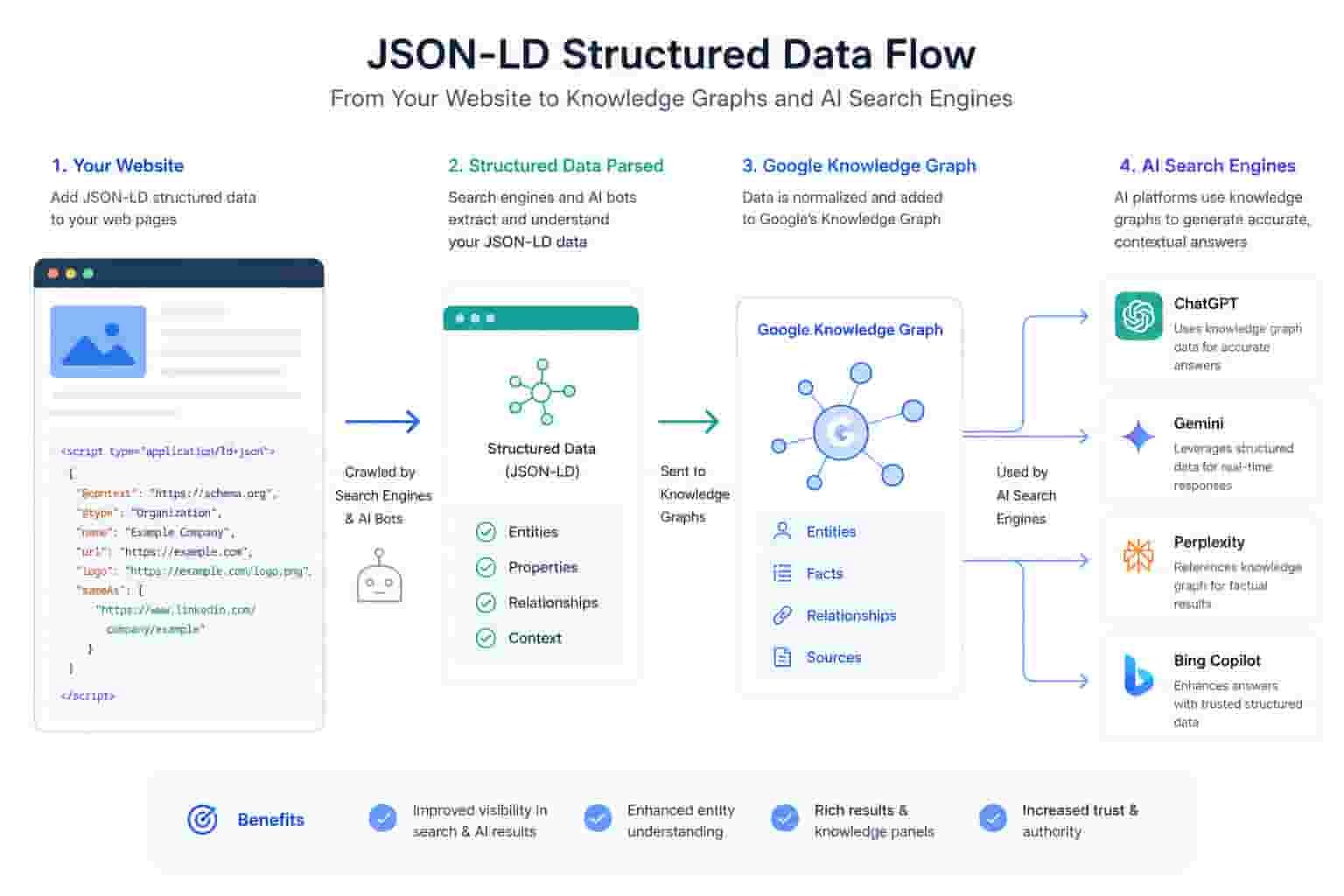
Semantic SEO: Teaching AI Engines What You Mean
Entity Linking and Topical Authority
Semantic SEO is the practice of optimizing content around meaning, context, and entity relationships rather than isolated keywords. AI search engines are fundamentally semantic systems: they understand that ‘Apple’ can mean a fruit or a technology company depending on context, and they use surrounding entities to disambiguate.
Entity Linking is the process of explicitly connecting your content’s entities to known, authoritative references such as Wikipedia, Wikidata, or Google’s Knowledge Graph. When your schema markup includes identifiers like same As pointing to authoritative sources, you are telling AI systems: This entity I describe is the same as this well known entity. This dramatically increases your content’s trustworthiness signal.
The Knowledge Graph Connection
Google’s Knowledge Graph is a vast database of real-world entities and their relationships. When your structured data is properly implemented, you are essentially submitting an application to have your entity recognized within this graph. Once recognized, your brand, product, or content becomes a first-class entity that AI systems can reference confidently.
To maximize Knowledge Graph integration, your structured data should include: consistent NAP data, author identity (via Person schema with sameAs references), organizational details, and topic-specific markup. SchemaExpertify‘s generators include fields for all of these attributes, making Knowledge Graph optimization accessible to any webmaster.
A Step-by-Step GEO & AEO Implementation Framework
Step 1 Conduct an Entity Audit
Identify the core entities your website represents: your brand, your team members, your products, your service areas, and your topical expertise. For each entity, gather canonical identifiers (Wikipedia URLs, Wikidata Q-numbers, social profile URLs) that will be used in your “sameAs” attributes.
Step 2 Generate Schema Markup with SchemaExpertify
Visit SchemaExpertify.com and use the free advanced generators to create JSON-LD markup for your priority schema types. The platform’s interface guides you through each required and recommended field, generating valid, Google-compliant code in seconds. Start with Organization or LocalBusiness schema to establish your entity, then layer in Article, FAQ, and Product schemas for individual pages.
Step 3 Implement Across Your Site Architecture
Deploy your schema markup consistently across all relevant page types. Use a global Organization/WebSite schema on every page, while layering page-specific schemas (Article on blog posts, Product on product pages, FAQPage on your FAQ section) for maximum coverage.
Step 4 Validate and Monitor
Use Google’s Rich Results Test and Schema Markup Validator to verify implementation accuracy. Monitor your Search Console for structured data errors and enhancements. Track AI snippet appearances using brand monitoring tools to measure GEO performance over time.
Step 5 Create Content for Semantic Clusters
Develop content organized around topic clusters groups of semantically related articles that comprehensively cover a subject domain. Each cluster should have a pillar page (broad overview) and supporting pages (specific subtopics), all internally linked. This signals topical authority to AI engines, increasing the probability your content is selected for generative answers.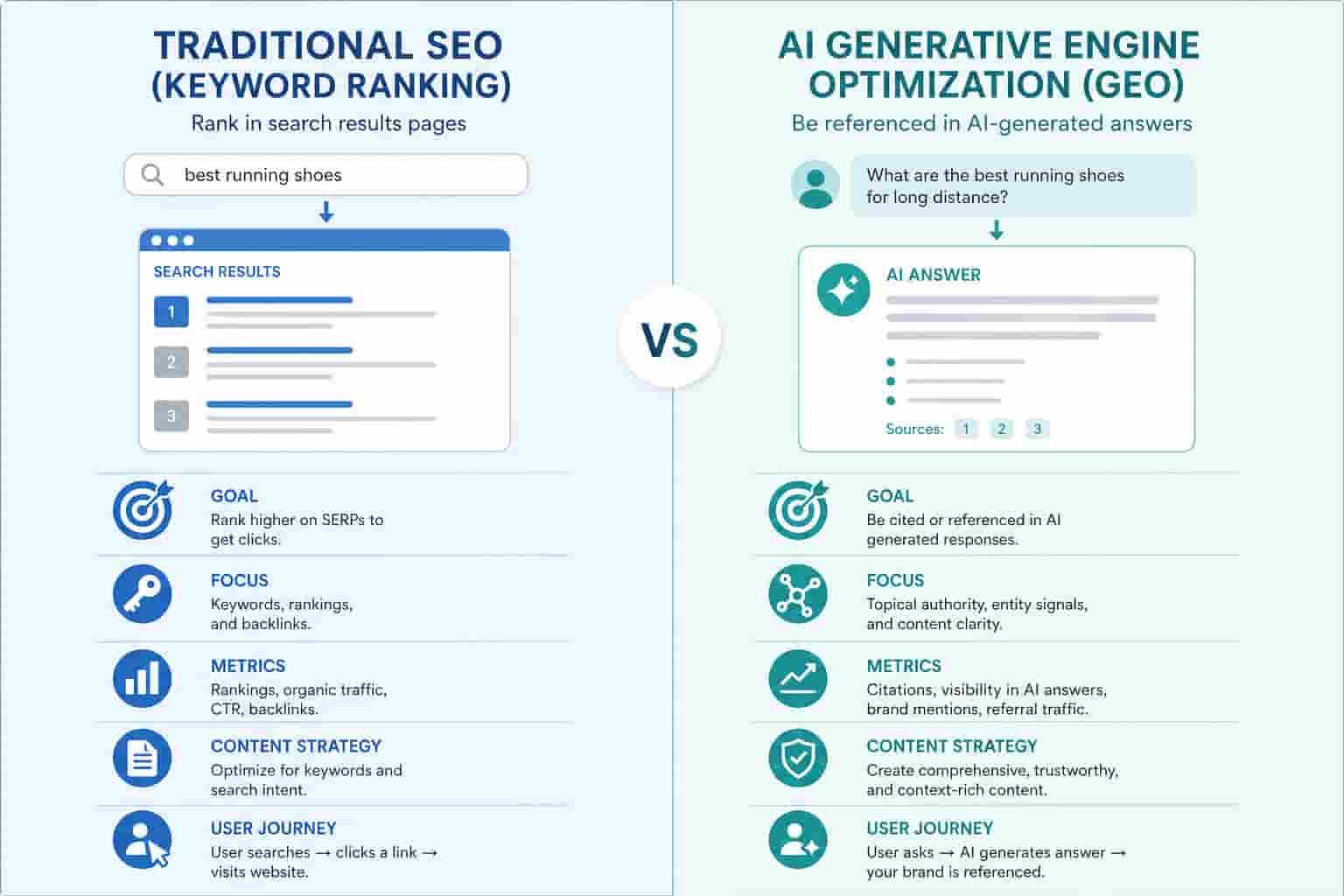
Advanced GEO Techniques for 2026
- Conversational Content Structure: AI engines favor content that directly answers questions. Structure your content with explicit question-and-answer formatting. Use headers phrased as questions (e.g., ‘What is Generative Engine Optimization?’) followed by concise, factual answers. Then expand with supporting detail.
- E-E-A-T Signal Amplification: Experience, Expertise, Authoritativeness, and Trustworthiness remain central to AI content selection. Implement Person schema for all authors, link to their credentials, and maintain consistent publishing standards. SchemaExpertify’s Article schema generator includes all necessary E-E-A-T fields.
- Multimodal Entity Consistency: Ensure your entity information is consistent across your website, Google Business Profile, social media platforms, Wikipedia (if applicable), and industry directories. AI engines cross-reference these sources; inconsistencies create doubt and reduce citation probability.
- Speakable Schema for Voice AI: With voice-based AI assistants growing in adoption, implementing Speakable schema on key paragraphs designates them as ideal for text-to-speech delivery giving your content a direct pathway into voice search responses.
Frequently Asked Questions (FAQ)
Q: What is the difference between GEO and traditional SEO?
A: Traditional SEO focuses on ranking webpages in search engine results pages (SERPs) through keyword optimization, backlinks, and technical factors. Generative Engine Optimization (GEO) focuses on making your content the source that AI engines cite, quote, or synthesize when generating conversational answers often without a traditional click-through.
Q: Why is JSON-LD preferred over Microdata for structured data?
A: JSON-LD is placed in the <script> tag of your HTML, keeping it separate from your content markup. This makes it easier to implement, update, and validate without risking HTML errors. Google officially recommends JSON-LD, and it is the format supported by SchemaExpertify’s generators.
Q: How does Answer Engine Optimization (AEO) differ from GEO?
A: AEO specifically targets answer boxes, voice search, and FAQ-style responses optimizing for queries with a direct, factual answer. GEO is broader, encompassing all generative AI output formats. In practice, both disciplines share the same foundational techniques: structured data, entity optimization, and semantic content architecture.
Q: Do I need technical coding skills to implement schema markup?
A: No. Platforms like SchemaExpertify.com provide free, user-friendly generators that produce ready-to-paste JSON-LD code. You simply fill in your information, copy the generated script, and add it to your webpage’s <head> section or CMS structured data field — no coding required.
Q: How long does it take to see results from GEO optimization?
A: Results vary depending on your domain authority, content quality, and competitive landscape. Generally, structured data can appear in Google’s rich results within days of implementation after crawling. AI snippet appearances depend on the specific engine’s crawl schedule and content evaluation typically, meaningful improvements are observed within 4 to 12 weeks of comprehensive implementation.
Structured Data Is the Language of AI Search
Generative Engine Optimization and Answer Engine Optimization are not optional advanced strategies for 2026 they are the baseline requirements for online visibility in an AI-first world. The businesses and content creators who invest in structured data, entity optimization, and semantic SEO today will dominate the AI snippets, knowledge panels, and conversational responses of tomorrow.Begin your GEO journey by generating your first schema markup at SchemaExpertify.com free, advanced, and built for the AI search era.
About the Author
Muhammad Sajad is a Technical SEO Expert and the Founder of SchemaExpertify.com, dedicated to helping businesses gain visibility in the age of AI search.