
Beyond Google The Best Tools for Tracking Schema on AI in 2026
We are past the era of ten blue links. In 2026, your potential customer in Chicago, Sydney, London, or Toronto is more likely to encounter your brand through a Gemini AI Overview, a Perplexity answer card, or a ChatGPT (Search GPT) citation than through a traditional organic click. The question every serious SEO professional needs to answer right now is this: Is my schema markup actually reaching these AI systems and how do I prove it?
This guide breaks down the most effective tools for tracking schema on AI, explains why entity based semantic SEO is the foundation of modern visibility, and shows you precisely how platforms like SchemaExpertify.com are helping brands go from invisible to primary source in AI generated responses.
In This Article
From Rich Results to AI Citations: What Changed
For nearly a decade, schema markup had one primary job: help Google render rich results star ratings, FAQs, breadcrumbs, product prices. That was the ceiling. You validated your JSON-LD in Google’s Rich Results Test, you confirmed the feature in Search Console, and you moved on.
That ceiling is gone.
The Generative Search Experience (SGE) and its successors Google’s AI Overviews, Bing’s Copilot integration, Perplexity’s answer engine, and Search GPT do not rank pages. They synthesize answers. And the way they decide whose content to synthesize comes down to a few key trust signals, with structured data being one of the most powerful.
- AI Overviews tracking is now a legitimate discipline, not a side project.
- Brands that are consistently cited in AI generated answers enjoy compounding trust the AI cites them, which trains future models to cite them again.
- Brands that ignore schema for AI are watching their organic visibility transfer to competitors who do not.
The shift from blue links to AI citations is not hypothetical. It is measurable and that measurement is exactly what this article addresses.
Schema Is the API for AI Here’s Why That Framing Matters
Think of your website the way an AI model does. It cannot read your page the way a human does. It processes signals and JSON-LD structured data is the clearest, most machine-readable signal you can send.
When you mark up a Product, Organization, FAQPage, or Article correctly, you are essentially publishing a structured API endpoint that AI crawlers, large language models, and retrieval-augmented generation (RAG) systems can consume without ambiguity.
“@context”: “https://schema.org”,
“@type”: “Article”,
“headline”: “Beyond Google: The Best Tools for Tracking Schema on AI”,
“author”: {
“@type”: “Person”,
“name”: “Your Name”,
“sameAs”: “https://yoursite.com/about”
},
“publisher”: {
“@type”: “Organization”,
“name”: “YourBrand”,
“logo”: { “@type”: “ImageObject”, “url”: “https://yoursite.com/logo.png” }
},
“datePublished”: “2026-04-01”,
“about”: {
“@type”: “Thing”,
“name”: “Schema Markup for AI Search”,
“description”: “Tracking and optimizing structured data for LLM citation.”
}
}
This is Schema validation for LLMs in practice. Every property you populate author, sameAs, about, publisher builds an entity graph that AI models cross-reference against their knowledge base. A well constructed entity record does not just help one search engine. It propagates across the entire AI search ecosystem.
sameAs connections, authorship signals, and topical depth differently than traditional crawlers do. Optimization for one does not guarantee optimization for both.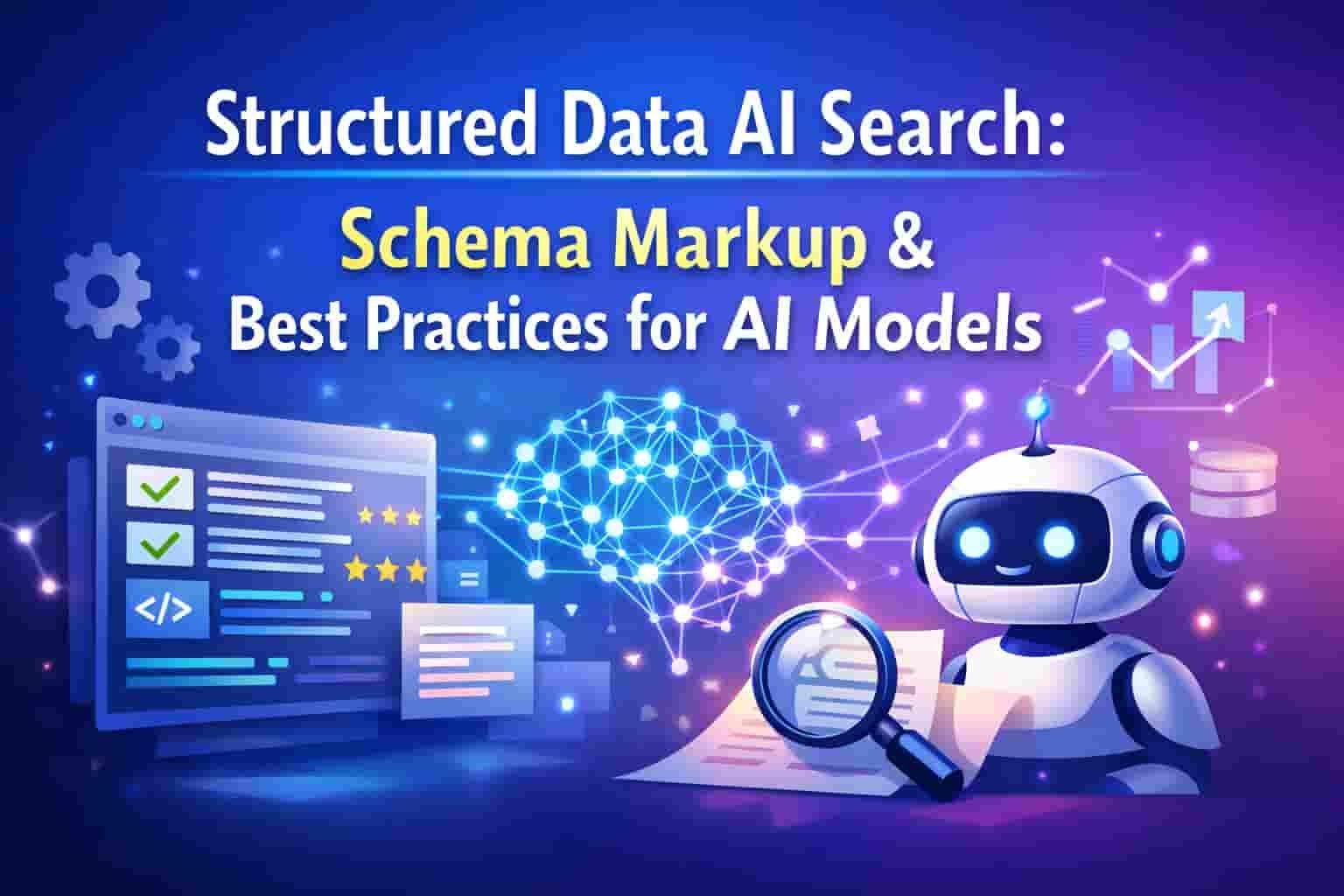
Tools for Tracking Schema on AI: The Methods Compared
There is no single dashboard that aggregates your AI citation rate across Gemini, Perplexity, and Search GPT yet. But there are four distinct methods that serious SEO practitioners are combining right now to build a meaningful picture. Here is how they stack up.
| Method / Tool | What It Tracks | AI Engines Covered | Effort Level | Best For |
|---|---|---|---|---|
| SearchGPT Insights (via Bing Webmaster Tools) | Queries triggering AI-generated answers where your URL is cited; impression trends in Copilot responses | Bing Copilot SearchGPT | Low | Teams already using Bing Webmaster Tools; quick wins in the Microsoft AI ecosystem |
| Google Search Console (GSC) | AI Overview appearances via the “Search type: AI Overviews” filter (limited data); rich result status; schema errors | Google AI Overviews | Low | Monitoring Google’s AI Overviews tracking at the query level; validating schema health |
| Manual Perplexity Testing | Whether your brand, URL, or content is cited in Perplexity answer cards; source panel appearances | Perplexity You.com | High | Competitive intelligence and one-off citation audits; useful for spotting entity recognition gaps |
| SchemaExpertify.com | End-to-end schema health, AI citation monitoring, entity disambiguation, GEO ranking factors, and structured data validation for LLMs | Gemini ChatGPT Perplexity Copilot | Low–Medium | Agencies and in-house SEO teams that need a unified platform for AI search analytics across all major engines |
Each method has a distinct ceiling. GSC gives you Google only data. Bing Webmaster Tools gives you Microsoft’s ecosystem. Manual testing does not scale past a handful of queries. The gap in the market a single source of truth for AI citation tracking is exactly where purpose-built platforms like SchemaExpertify are stepping in.
How SchemaExpertify.com Helps Brands Become Primary AI Sources
Being cited by Gemini or ChatGPT is not random. It follows patterns that you can engineer and that engineering starts with a clean, complete, and AI optimized schema architecture.
SchemaExpertify.com operates at the intersection of technical SEO and GEO (Generative Engine Optimization). Its core function is not just to validate your JSON-LD against schema.org standards it is to tell you whether your structured data is performing in AI generated answer environments. That distinction matters enormously.
What SchemaExpertify Does Differently
- AI Citation Monitoring: Rather than tracking keyword rankings, SchemaExpertify monitors whether your entities appear in AI generated responses across major engines giving you the AI search analytics that GSC alone cannot provide.
- Entity Disambiguation: One of the biggest reasons brands get skipped by AI answers is entity confusion. If your brand name is ambiguous, AI models default to the clearest entity signal. SchemaExpertify identifies and resolves these conflicts using
sameAslinking and Knowledge Graph alignment. - Schema Validation for LLMs: Standard schema validators tell you if your JSON-LD is technically correct. SchemaExpertify tells you if it is AI effective whether your property completeness, nesting depth, and entity relationships meet the bar that LLM-based systems use when deciding which sources to cite.
- GEO Ranking Factor Audits: The platform maps your schema against known GEO ranking factors topical authority signals, source freshness, authorship credibility and surfaces specific gaps.
- Gemini Source Citation Monitoring: For brands operating in markets where Google’s Gemini dominates (particularly the USA and Australia), SchemaExpertify provides dedicated Gemini source citation tracking at the page and entity level.
For agencies managing multiple clients, this kind of consolidated AI search analytics is the difference between guessing and knowing. It is also a significant competitive edge most brands are not yet running structured citation audits at this level of granularity.
Market Focus: Why USA and Australia Are Ground Zero for AI Search
AI Search Is Not Evenly Distributed
- United States: Home to the highest adoption rates of AI Overviews, SearchGPT, and Perplexity. Google AI Overviews now trigger on an estimated 30–40% of informational queries. Brand visibility in ChatGPT is a genuine KPI for US-based enterprises.
- Australia: AI Overviews rolled out aggressively in the Australian market through 2025, making it one of the highest per-capita AI search markets outside the USA. Gemini source citation is increasingly influencing local brand trust.
- United Kingdom: Bing Copilot usage is notably higher in the UK, making Search GPT Insights via Bing Webmaster Tools particularly relevant for UK based SEO teams.
- Canada: The Canadian market shows a dual Google/Bing split, meaning both GSC and Bing Webmaster Tools are necessary for full AI citation coverage.
For SEO professionals working across these markets, a single engine monitoring approach is not sufficient. A brand appearing prominently in Gemini AI Overviews in Sydney may be completely absent from Perplexity answers in Toronto despite having identical structured data. Geographic AI search behavior varies significantly, and your schema tracking strategy needs to reflect that.
Entity First SEO: The Core of GEO Ranking Factors
If you want to be cited by AI models, you need to stop thinking in keywords and start thinking in entities. An entity is any clearly defined, uniquely identifiable thing a person, organization, product, concept, or place that a knowledge graph can anchor to a reliable source of truth.
Entity-based SEO is not new, but its importance has jumped by an order of magnitude since AI answer engines became mainstream. Here is why:
- AI models do not retrieve documents based on keyword matches. They retrieve based on entity relevance whether your content is strongly associated with the entities a query is about.
- Semantic SEO tools including SchemaExpertify, In Links, and similar platforms measure your entity coverage and help you build the topical authority graphs that LLMs rely on.
- The
sameAsproperty in your schema is your entity’s passport. Linking your organization to its Wikidata entry, Wikipedia article, LinkedIn page, and Crunchbase profile tells every AI system exactly who you are eliminating the ambiguity that causes citation misattribution.
Rich Results vs AI Citations: Understand the Difference
Many SEO professionals still conflate these two outcomes. They are related but not the same thing, and optimizing for one does not guarantee the other.
- Rich Results are Google specific SERP features star ratings, FAQs, product cards triggered when your schema meets Google’s documentation requirements.
- AI Citations are source mentions inside AI-generated answer panels across any engine. They are triggered by a combination of entity authority, topical trust, schema completeness, and content freshness.
You can have perfect rich results and zero AI citations. You can also have strong AI citation rates with imperfect rich results. Measure both. Optimize for both. They are not the same goal.
The GEO Ranking Factors That Actually Move the Needle
Based on current research and practitioner data, the factors with the strongest correlation to consistent AI citation include:
- Entity completeness: How many schema properties are populated relative to the type’s full spec.
- Authorship credibility: Is the content’s author a recognized entity with their own schema markup and external references?
- Topical authority depth: Does your site have dense, semantically linked coverage of the topic the query addresses?
- Source freshness: AI models weight recently updated content more heavily for time-sensitive topics.
dateModifiedin your Article schema is not optional. - Cross-domain entity recognition: Is your brand entity mentioned and linked from other high-authority sources that AI models already trust?
The Bottom Line: Measure or Get Left Behind
The brands that will dominate AI-generated search results in the next three years are not necessarily the ones with the biggest budgets or the most backlinks. They are the ones who treat schema markup as a living system monitoring it, iterating on it, and measuring its impact not just in Google’s rich results but across every AI engine their customers are using.
The tools for tracking schema on AI exist. Some are free and already in your toolkit (GSC, Bing Webmaster Tools). Some require manual effort (Perplexity prompt testing). And some, like SchemaExpertify.com, are purpose-built for exactly this problem giving SEO professionals in the USA, Australia, UK, and Canada a systematic way to monitor AI citation rates, resolve entity conflicts, and make structured data work harder in the Generative Search Experience.
Schema markup is no longer just about earning a gold star in the SERP. It is your brand’s direct line to the AI models your customers are talking to right now. Start tracking it like it matters because it does.